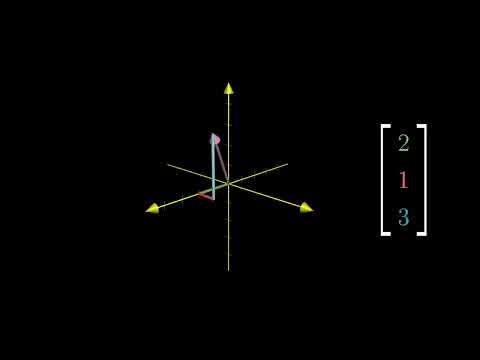
The first chapter of 3Blue1Brown's Essence of Linear Algebra series, introducing vectors with animated geometric visuals. It begins a series that builds intuition for linear algebra from the basics.
Jim Weirich's RubyConf 2012 talk derives the Y combinator step by step, live-coding in Ruby lambdas. It builds up an understanding of functional programming and lambda calculus from first principles.
A HOPE09 talk on how modern computer chips are manufactured, from 22nm transistors to ultra-clean fabs and the tricks used to pattern tiny features with light. It frames chipmaking as hacking electrical engineering and physics.
Patrick Winston's long-running MIT lecture on public speaking teaches heuristic rules for talks. It covers how to start, use time and place, boards, props and slides, and how to inform, persuade and finish.
Andrej Karpathy's first Neural Networks: Zero to Hero lecture, which builds micrograd, a tiny autograd engine, from scratch in Python. It explains backpropagation and neural network training step by step, assuming only basic Python and some high-school calculus.
Mark Ferrari, the LucasArts background artist, explains in a GDC 2016 talk how he draws 8-bit graphics. He covers color cycling and palette shifting to create complex animated scenery without frame animation.
Armin Ronacher, creator of Flask, explains how CPython's internals and C API leak into the language's semantics. Using examples like the complexity of the add operation, he shows why Python is hard to optimize or reimplement.
A Bell Labs film in which Dr. J.N. Shive uses a mechanical wave machine to demonstrate reflection, standing waves, resonance and impedance matching. He includes some equations but relies mostly on real-world examples a layperson can follow.
Dan Olson's 76-minute essay on flat earth belief, built around a hike to a lake to test earth's curvature. It examines the community, how YouTube promoted it, and how it connects to wider conspiracy thinking and QAnon.
The opening lecture of Robert Sapolsky's Stanford course on Human Behavioral Biology, explaining the course premise and how to avoid categorical thinking. It starts a roughly 25-lecture series on how biology, genes, hormones and environment shape behavior.
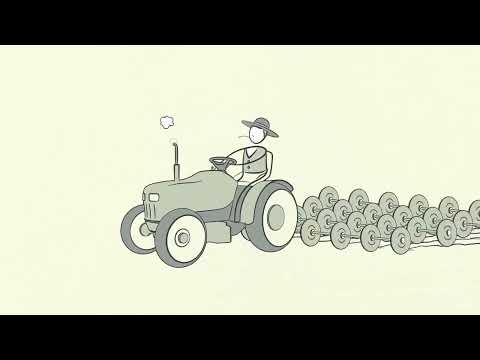
Ray Dalio's 30-minute animated video explains how the economy works through credit, debt, interest rates, and short- and long-term cycles. It is based on his template for understanding the economy.
Sandi Metz takes an ugly section of conditional code and refactors it into a few simple objects, bridging object-oriented theory and practice. The talk includes her take on the Gilded Rose refactoring kata and the idea that duplication is cheaper than the wrong abstraction.
 HackerTube
 course